why do we assign State variables inside the constructor ?*STATE VARIABLE IMPORTANT POINTS*LOCAL VARIABLE IMPORTANT POINTSSolidity - Variables - GeeksforGeeks
GLOBAL VARIABLESVariable |
Return value |
|---|---|
| blockhash(uint blockNumber) returns (bytes32) | Hash of a given block, works for only 256 most recent transactions excluding current blocks |
| block.coinbase (address payable) | Address of current blocks miner |
| block. difficulty (uint) | The difficulty of the current block |
| block. gaslimit (uint) | Gaslimit of the current block |
| block. number (uint) | Block number of the current block |
| block. timestamp (uint) | The timestamp of the current block as seconds since Unix epoch |
| gasleft() returns (uint256) | Amount of gas left |
| msg. data (bytes calldata) | Complete call data of block |
| msg. sender (address payable) | The sender of message i.e. current caller |
| msg.sig (bytes4) | First four bytes of call data i.e. function identifier |
| msg. value (uint) | Amount of Wei sent with a message |
| now (uint) | The timestamp of the current block |
| gasleft() returns (uint256) | Amount of gas left |
| tx.gasprice (uint) | Price of gas for the transaction |
| tx.origin (address payable) | Transaction sender |
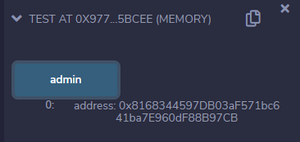
Example: In the below example, the contact Test uses the msg.sender variable to access the address of the person deploying the contract.
// Solidity program to
// show Global variables
pragma solidity ^0.5.0;

// Creating a contract
contract Test {

// Defining a variable
address public admin;

// Creating a constructor to
// use Global variable
constructor() public {
	admin = msg.sender;
}
}
Output: